Compost food scraps at home, even in a flat
Food scraps are the heaviest part of many UK household bins, and almost all of them can go somewhere better than landfill. This low waste home guide walks through four working setups, so you can pick the one you will actually keep using.
There is no best composting method, only the one that suits your space and how much you cook.
Start with the four setups below, then check the troubleshooting rows before you invest in anything.
Why food scraps matter in the bin
When food waste goes to landfill, it breaks down without oxygen and produces methane, a greenhouse gas. UK councils have been rolling out separate food waste collections, but coverage is uneven across the country. If your borough collects food waste, use it. If not, home composting or a bokashi bin keeps those scraps out of the general waste bin entirely.
There is a second benefit: compost is useful. If you grow anything, in pots, in a window box, in a garden bed, home compost is a free supply of soil improver. Even if you do not grow anything, you can give finished compost to a neighbour, a community garden, or a local allotment. Someone nearby will want it.
- Goes to landfill Breaks down without oxygen and releases methane.
- Composted at home Breaks down with air and becomes soil improver you can use or give away.
- Council collection Coverage varies, so check your council's page before you assume it is available.
Pick the setup that fits your space
Composting food scraps at home gets easier once you know which of these four you have room for. Each one works a little differently, and none of them need a garden to start.
A garden compost bin is the simplest setup
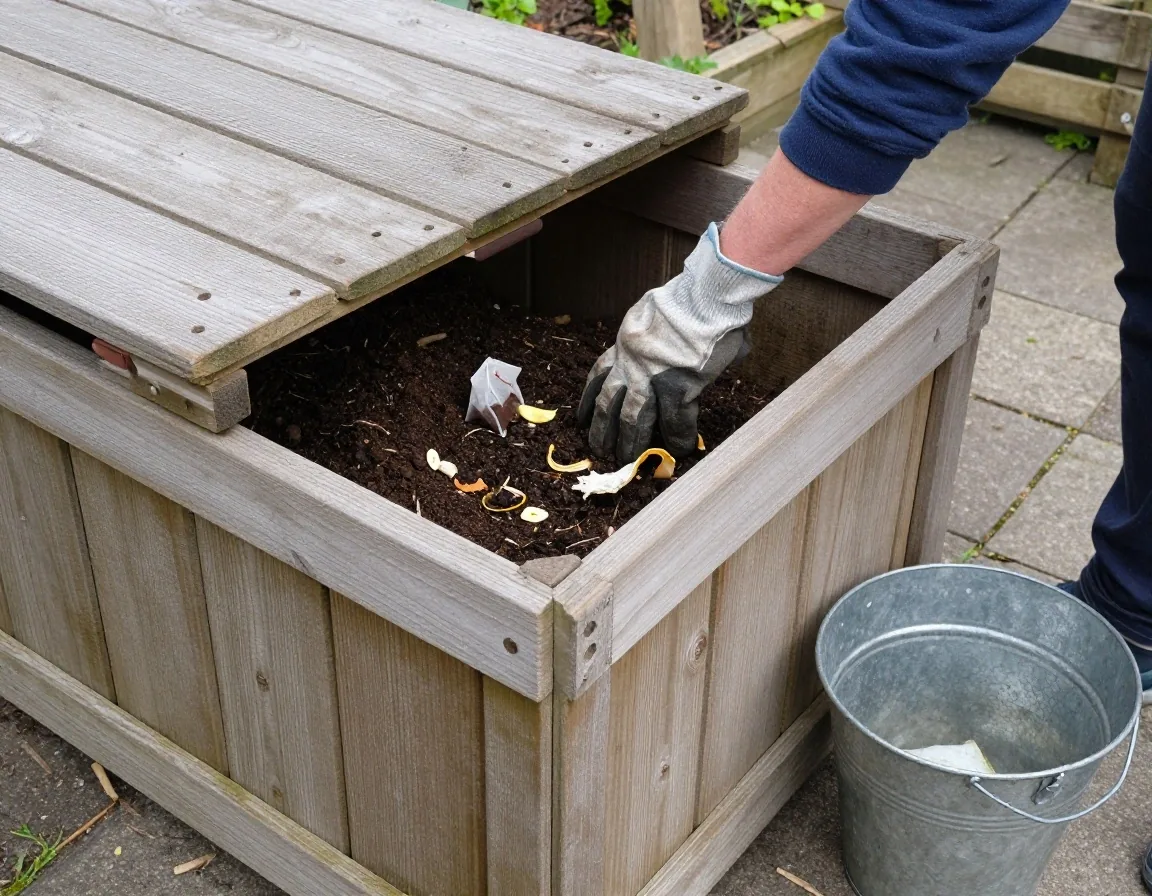
If you have a garden or a shared outdoor space, a compost bin is the default option. A plastic dalek bin from the council is cheap and adequate. A wooden pallet bin works too. Put it on soil or on a hard surface with a layer of soil at the bottom, not on concrete where worms cannot get in.
The mix is greens and browns. Greens are kitchen scraps, grass cuttings, tea leaves. Browns are cardboard, egg boxes, dry leaves, shredded paper, woodchip. Aim for roughly equal amounts by volume and turn it occasionally with a fork.
- It smells sour or rotten: add more browns and turn it.
- It sits wet and slimy: add more browns and turn it.
- It is dry and not breaking down: water it a little and add greens.
Finished compost takes six months to a year, depending on the weather and how often you turn it. If your bin is new and nothing seems to happen for weeks, give it time; a wet UK winter can slow the whole heap down, and it usually catches up in spring.
A bokashi bin fits under the sink
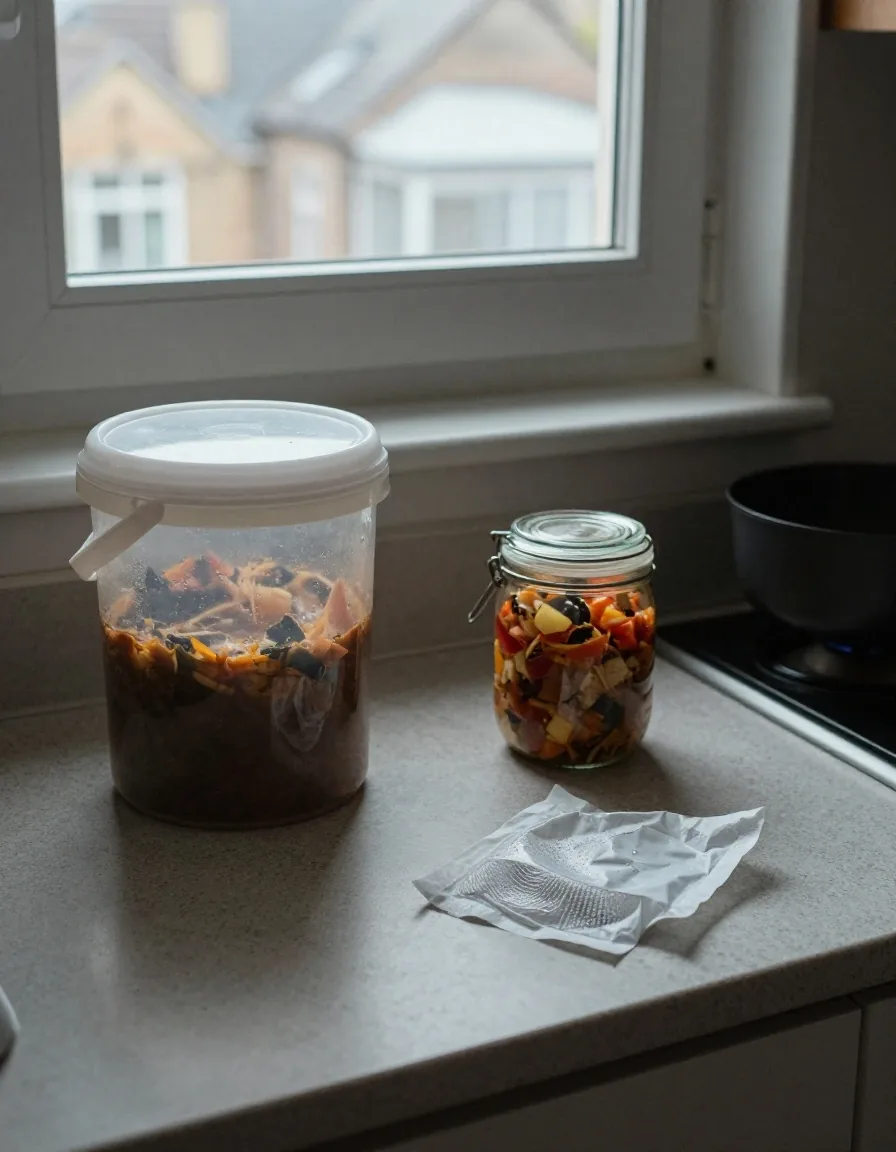
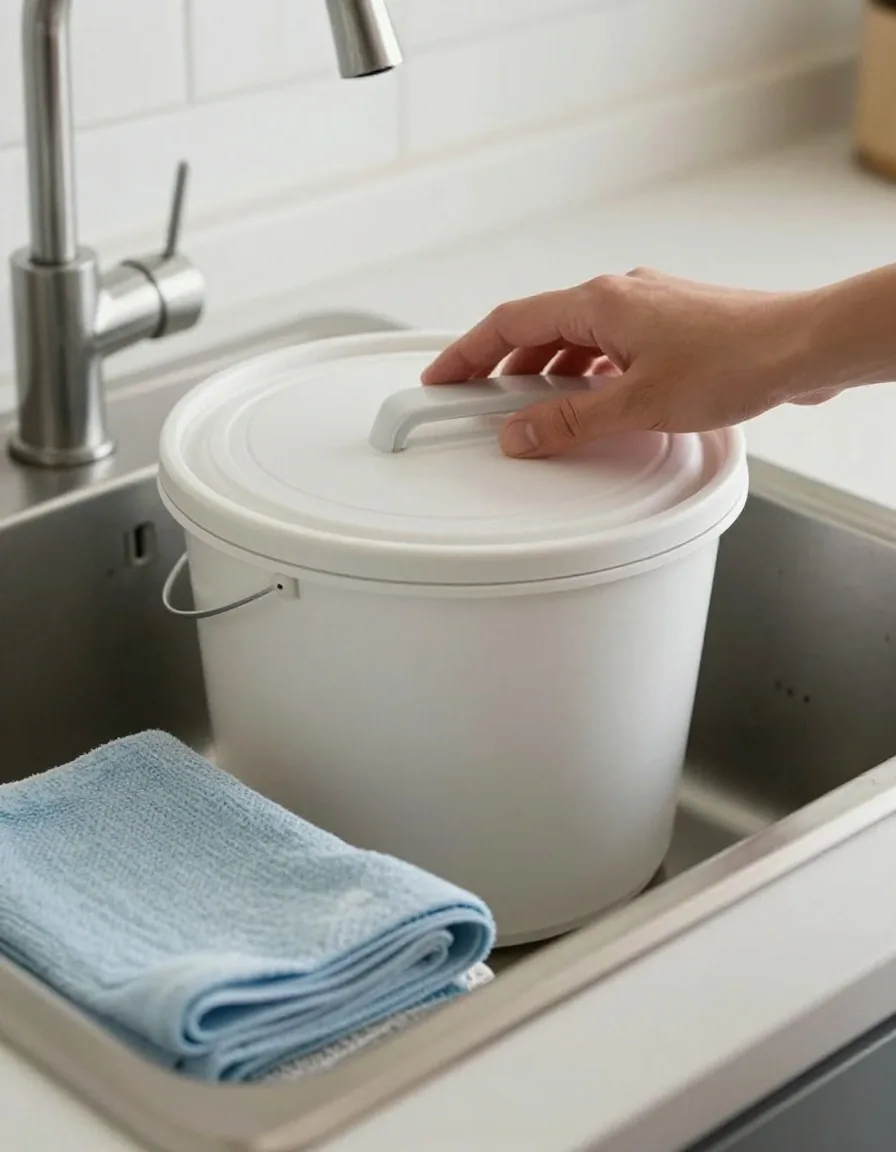
A bokashi bin is a sealed bucket that ferments food scraps using a bran inoculated with effective microorganisms. It sits under the sink or in a cupboard, and takes everything a normal compost bin cannot: cooked food, meat, fish, dairy, small bones. You add scraps, sprinkle a handful of bran on top, press down to remove air, and seal the lid.
Every few days, drain the liquid from the tap at the bottom. Dilute it 1:100 with water and use it on plants, or pour it down the drain to keep it clear. When the bin is full, leave it sealed for two weeks. The contents will not look like compost; they will look pickled. You then bury them in a garden, add them to a compost bin, or use a council food waste collection.
Worth knowing
Bokashi does not produce compost on its own, only pre-treated waste that breaks down quickly once it hits soil. If you have no soil to bury it in, pair it with a council or community collection instead.
A wormery for balconies and small gardens
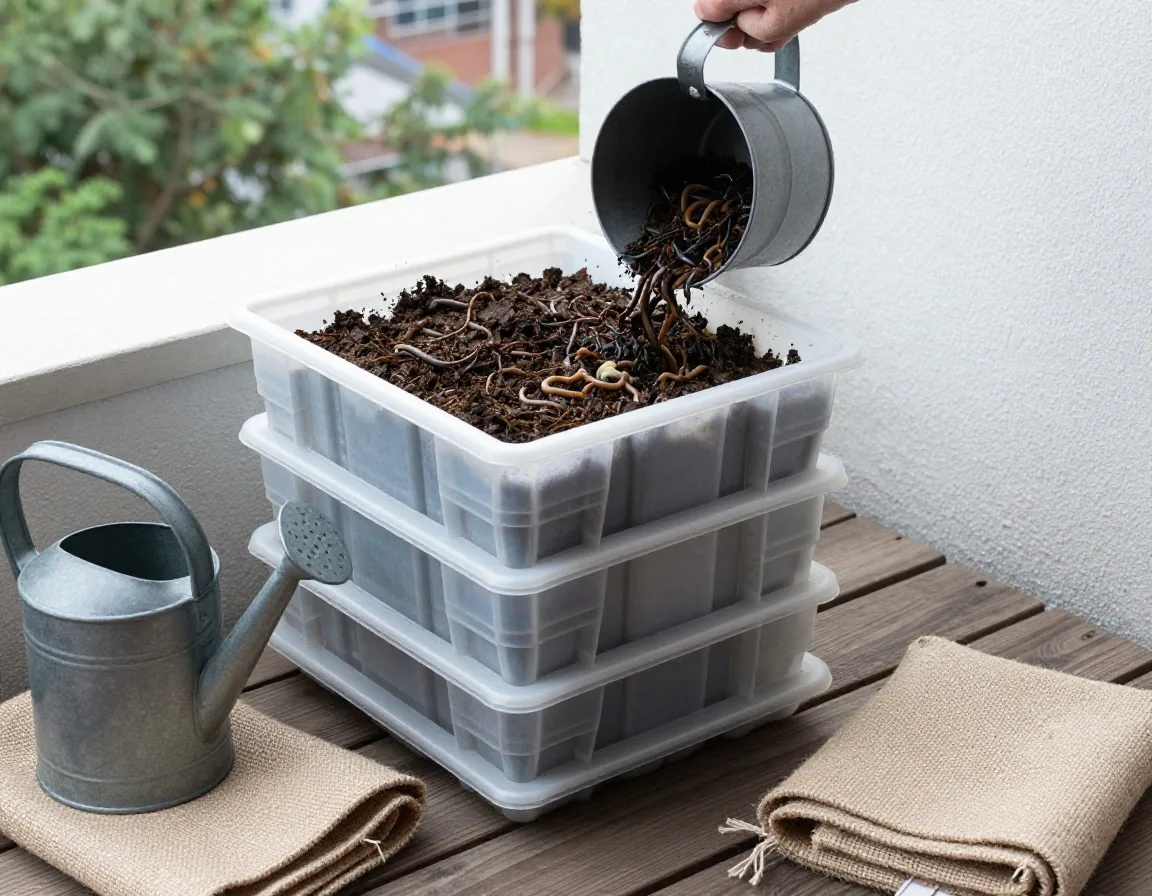
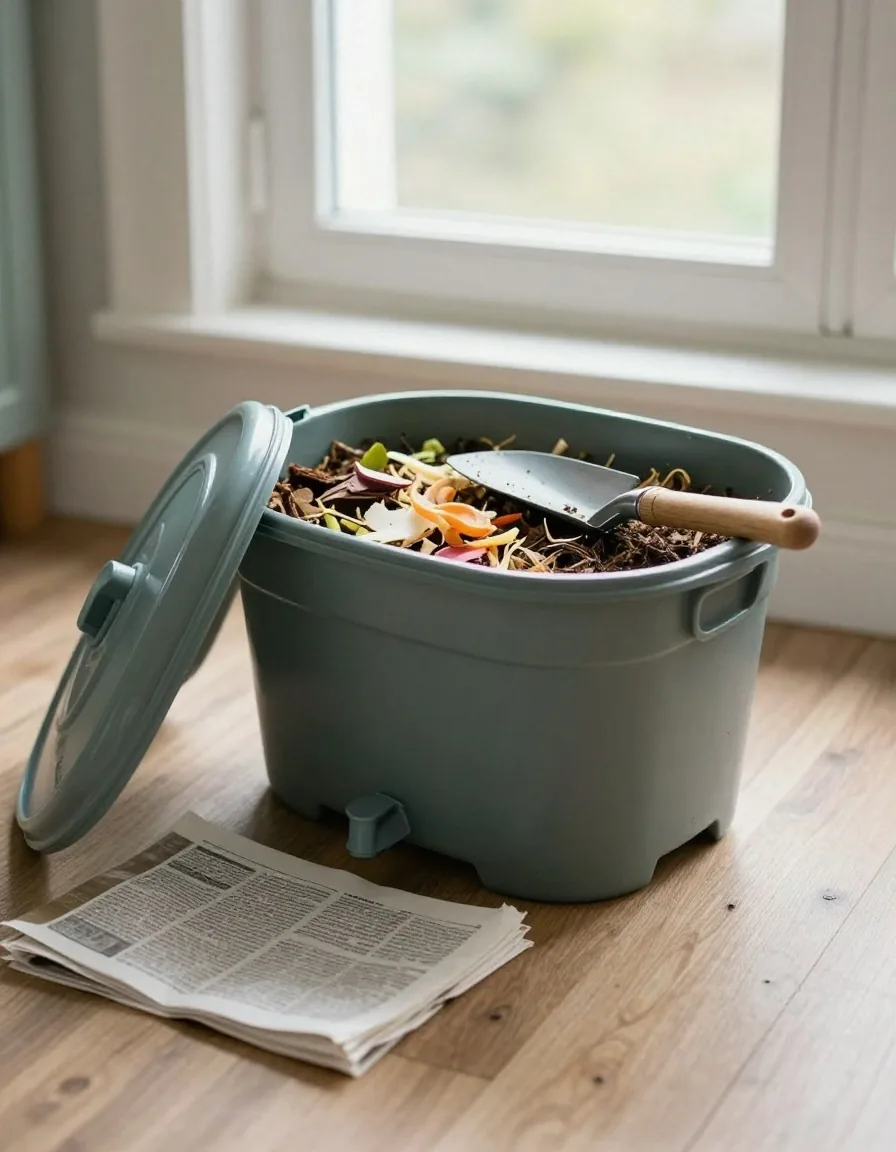
A wormery is a stack of trays with tiger worms in the top. You add kitchen scraps, the worms eat them, and the lower trays collect worm castings, a rich compost. Worms also produce a liquid that drains from a tap at the bottom, which you dilute and use on plants.
A wormery needs a shaded spot, not too hot, not too cold, and a frost-free winter. A balcony or a sheltered corner of a small garden works. Keep the bedding damp but not wet. If it smells, you are overfeeding, so skip a week and let the worms catch up.
Worms will eat
- Vegetable scraps
- Coffee grounds
- Plastic-free tea bags
- Crushed eggshells
- Small amounts of cardboard
Keep these out
- Meat and dairy
- Oily food
- Large amounts of citrus
- Onions and garlic in bulk
- Tea bags with a plastic seal
Council and community food waste collection
If you are in a flat with no outdoor space and no willingness to keep a bokashi bin, a council food waste collection is the cleanest option. Most UK councils that run one provide a small kitchen caddy and a larger outdoor bin.
Line the caddy with a compostable liner or newspaper to keep it clean. Empty it into the outdoor bin every couple of days to avoid smells. In a hot spell, empty it daily and rinse the caddy with cold water; you do not need anything stronger than a little vinegar and water to keep a kitchen caddy usable.
If your council does not collect food waste, look for community compost schemes. Cities like Bristol, Manchester and Leeds have volunteer-run collection points where households drop off scraps. Some are weekly pickups by bike, some are drop-off points at community gardens. Search for community compost plus your city name to find one nearby.
- Line the caddy with a compostable liner or newspaper.
- Empty into the outdoor bin every couple of days.
- Rinse in summer, and more often if the kitchen runs warm.
What not to compost
A bin full of the wrong things stops working, and then people give up. It is better to send a doubtful item to general waste than to spoil a working heap.
Cooked food, meat and dairy
These should not go in a standard garden compost bin. If you want to compost them at home, a bokashi bin is the way in.
Diseased plants and pet waste
Diseased plant material spreads in compost. Cat and dog waste carries pathogens, so neither belongs in a home bin.
Glossy paper, receipts, plastic-sealed bags
Glossy paper and receipts contain plastics and coatings. Tea bags often have a plastic seal, so check the box before adding them.
Compostable PLA plastic needs industrial conditions and will not break down in a home bin, even if the label says compostable. If you are unsure about any item, the safe move is the general waste bin, not the compost.
Composting questions we get most
Tap a question to open the answer.
Can I compost without a garden?
Yes. A bokashi bin works under the sink in a kitchen with no outdoor space. A wormery works on a balcony. Council or community food waste collection works for flats with neither.
How long does it take to get finished compost?
From a garden compost bin, six months to a year, depending on the weather and how often you turn it. Bokashi pre-treatment takes two weeks before the contents go into soil.
Do bokashi bins smell?
Not if you use them correctly. The fermentation process produces a slightly vinegary smell, not rot. If it smells bad, you probably need more bran or a better seal on the lid.
Keep going where it helps most
Two guides that sit next to this one, plus a person to ask if you are stuck.
- Kitchen Swaps & Plastic-Free Storage Swap single-use kitchen habits and dry-goods storage before you sort scraps. Read the kitchen swaps guide
- Sustainable Shopping & Buying in Bulk Buying in bulk and refill shopping cut packaging before it reaches the bin. See the sustainable shopping tips
- Zero Waste Starter Guide The full walk-through if this is your first visit to Rubbish Rebels. Back to the starter guide
Not sure which setup fits your home?
Tell us whether you have a garden, a balcony or just a cupboard, and we will point you at the option that will actually work in your kitchen. Rubbish Rebels is a beginner's guide to a lower-waste home, not a shop.