Kitchen swaps that cut plastic
Your kitchen is where single-use items multiply fastest. This is where we replace the ones you actually use with alternatives that fit normal cooking — boxes, jars, wraps and cloths that still work in three months.
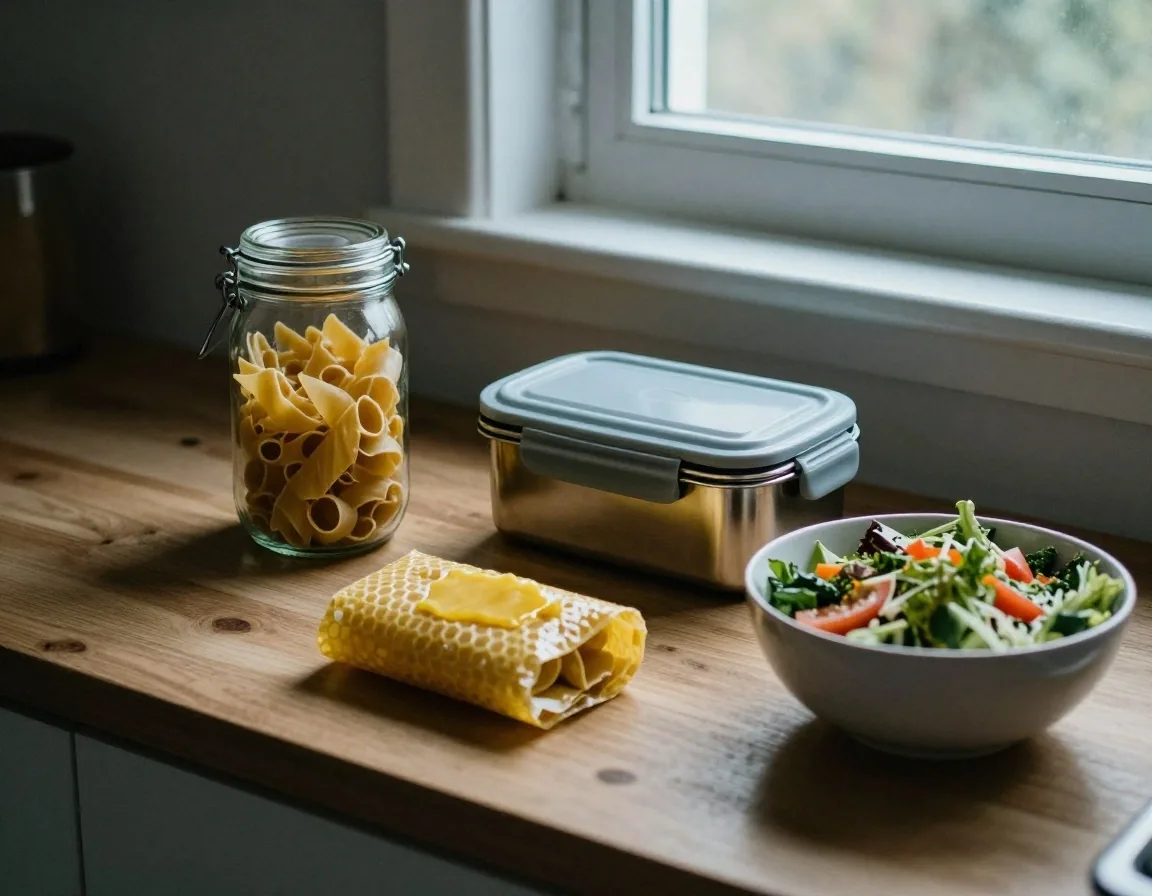
A swap only counts if you are still using it in three months.
See what is worth skippingReplace two things properly, not ten optimistically
Swap ledger — kitchen, single-use
These are the lines most UK households cross out first in a low waste home guide. If the reusable version is fussier than the disposable one, it ends up in a cupboard. Read down the list, pick the two habits you actually repeat, and ignore the rest for now.
None of these individually matter much. Together they are most of what a UK household throws away each week — and they are the easiest part of a low waste home to change without buying anything new this month.
Plastic-free food storage
Cling film is convenient and terrible: a single-use soft plastic most UK councils will not recycle. The replacement is not a shopping trip. It is the glass jars, boxes and bowls already in your cupboards — used deliberately.
You do not need matching sets. A clean jam jar holds spices, rice, leftovers or soup just as well as a purpose-bought container, and it costs nothing to try this week.
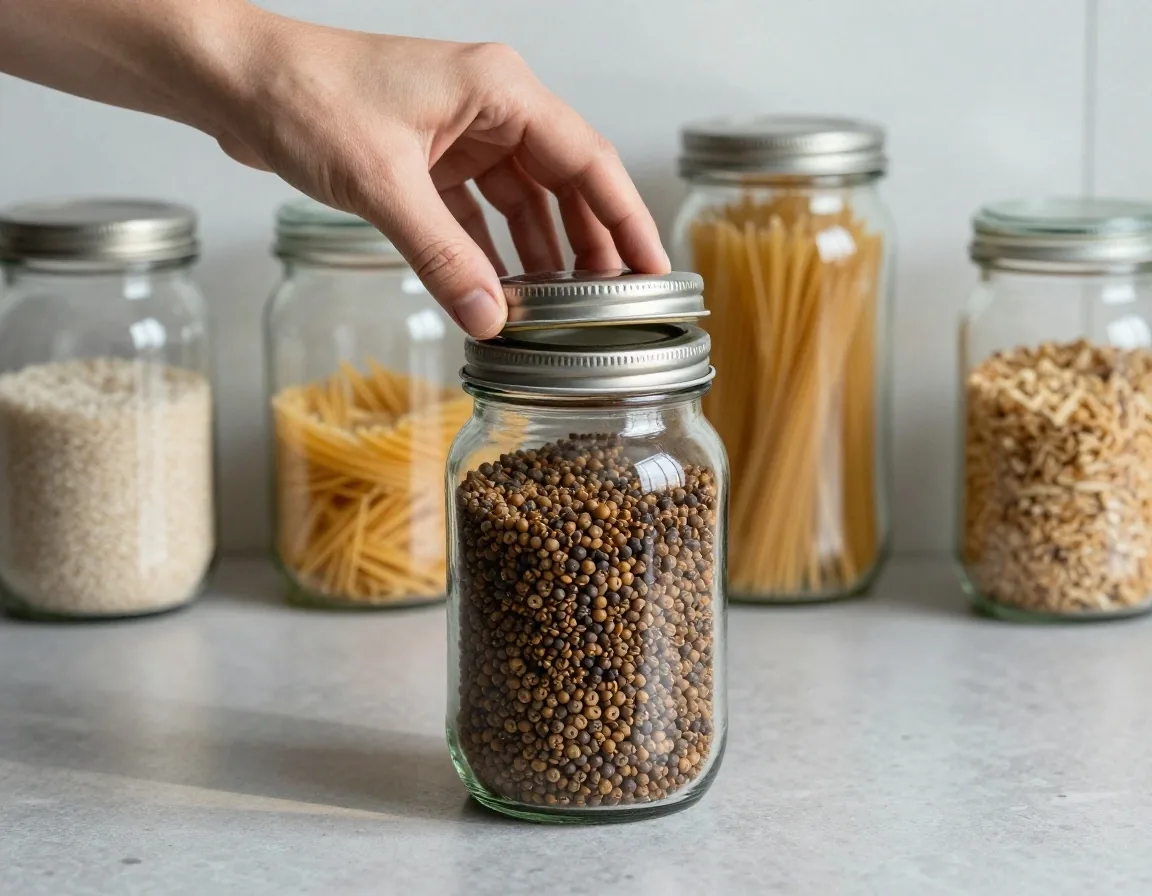
- Dry goods Glass jars with screw lids for rice, pasta, pulses, flour and spices. Buy loose where you can; the jar does not care how the grain arrived.
- Leftovers Lidded boxes you already own, in whatever sizes match your portions. Stack them in one cupboard so they are easier to reach than the foil.
- Short on lids A bowl with a plate set on top works for a night in the fridge. It looks improvised because it is, and it still stops the food drying out.
- Soups and sauces Use a jar with headroom and let the contents cool before the lid goes on. Hot liquid plus a sealed lid is how glass cracks.
Beeswax wraps: usage and care
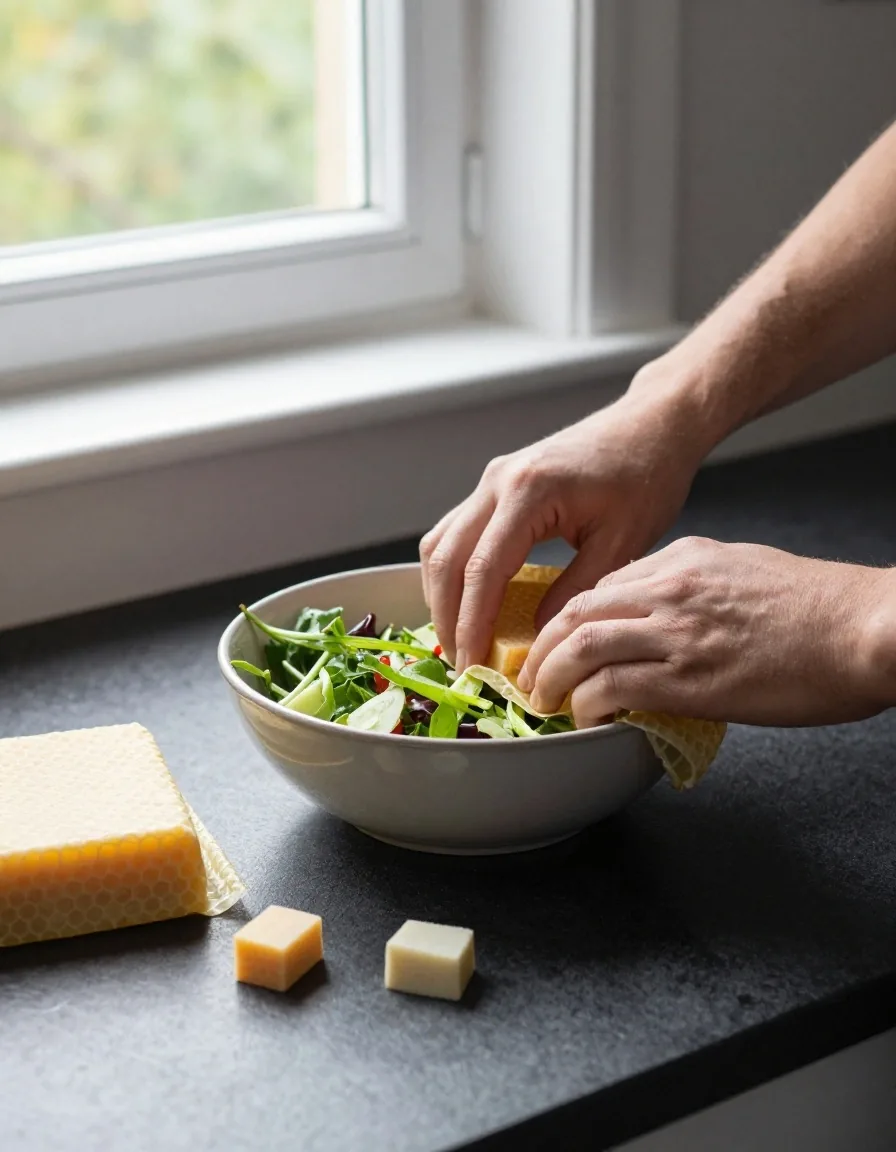
Beeswax wraps are useful for cheese, bread, cut veg and covering a bowl. They are not for raw meat, fish or anything hot, and they are not a replacement for a container when you need a leak-proof seal. A wrap over a bowl of salad is fine; a wrap around soup is not.
To use
Warm the wrap slightly between your hands so it turns tacky, then mould it around the item or across the rim. The warmth of your hands is doing the work, not pressure.
To clean
Cool water and a little mild soap. Hot water melts and strips the wax, which is the single most common way a wrap gets retired early. Air dry flat, away from a radiator.
When a wrap stops sticking, it is not finished. Grate a little beeswax over it, sandwich it between two sheets of baking paper and iron on low until the wax melts in. That extends the life by months and costs a fraction of a new set. Replacements are widely available in the UK if you would rather buy than refresh.
Reusable produce bags
Plastic produce bags are one of the easiest wins on this page because there is a straight swap: a set of cloth or mesh drawstring bags you take to the shop. Nothing about how you shop changes — only what the apples travel in.
You do not need a big set. Four or five bags covers most shops for a household of two, and they go in with your normal laundry. The main failure point is forgetting them, so keep them in your everyday bag or by the door rather than folded in a drawer.
Cleaning without a plastic trail
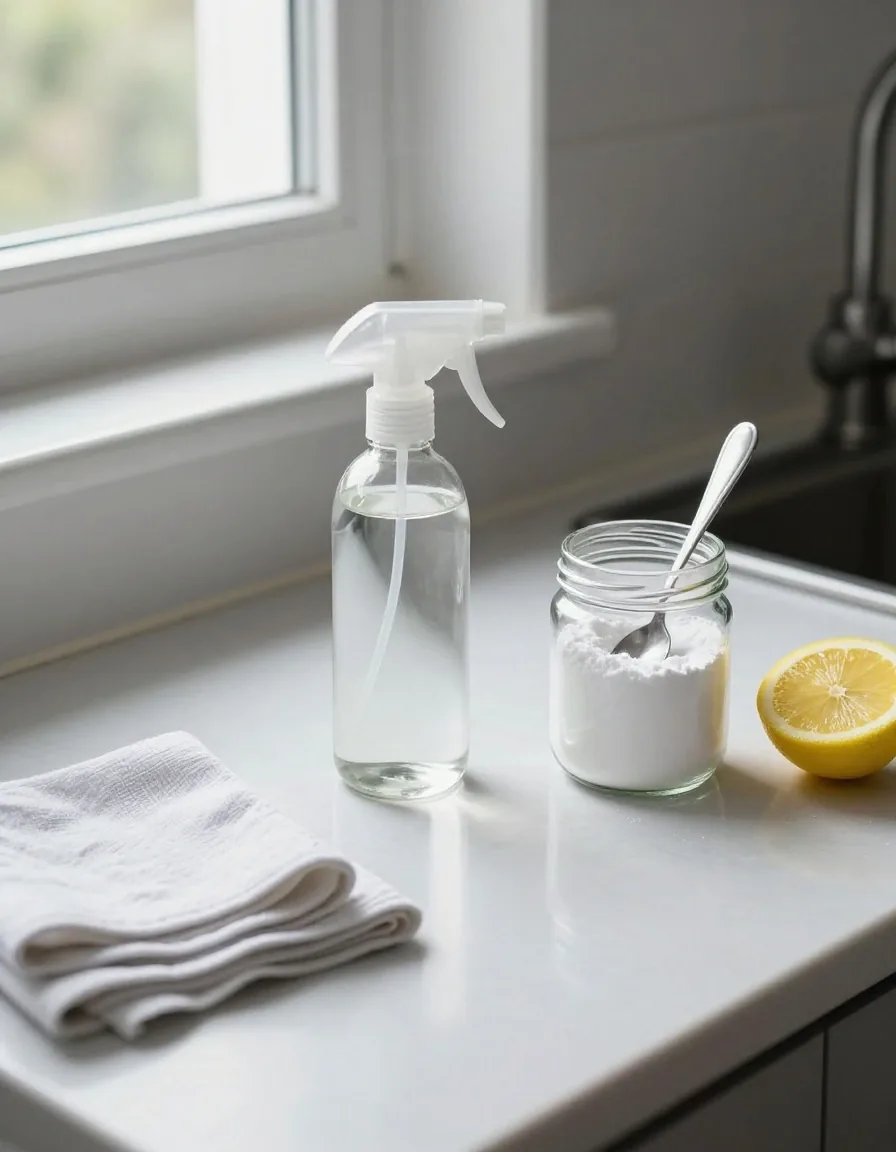
Kitchen cleaning generates a surprising amount of waste: bottles, plastic sponges, wipes, refills in pouches. The replacements are dull, cheap and effective. A concentrated refill for your usual spray bottle cuts the plastic sharply compared with buying a new bottle each time, and it keeps the trigger and label you already know.
You do not have to use the basics for everything. Keep one commercial cleaner for the jobs you care about and let the vinegar, bicarb and cloth handle the rest. That mix is what eco friendly kitchen cleaning tends to look like in real homes — not a shelf of matching bottles.
Storing food so you waste less
The best storage is the one that gets eaten
The best plastic-free food storage is also the best food-waste storage — the two problems share a solution. Most of what you throw out was fine when you put it away and forgotten when it mattered.
Herbs
Stems in a jar of water, tops covered with a bag or a wrap. Change the water when you remember. Parsley and coriander keep noticeably longer this way than flat in the drawer.
Carrots and celery
A container of water in the fridge keeps them crisp. Celery especially: it goes limp in a bag and stays upright in water. Top up as you take pieces out.
Bread
A cloth bag or a bread bin beats a plastic bag, which traps moisture and speeds up mould. If you freeze a loaf, the cloth bag still works inside the freezer.
Label leftovers with the date you cooked them — a strip of masking tape and a pen. That one habit cuts more waste than most storage products ever will, because you eat what you made instead of finding it three weeks later.
Composting and food wasteWhat to skip
Good swaps are the ones you do not have to think about after week two. If a swap still feels like admin a month in, it was the wrong swap for your kitchen — and that is useful information, not a failure.
-
Anything that requires you to reorganise the whole kitchen to use it.
-
Matching sets of storage containers — mismatched jars and boxes do the same job for less.
-
Reusable straws if you never use straws. Buying a solution to a habit you do not have is still buying.
-
A kitchen compost caddy you will not empty — a caddy that sits for a week is worse than no caddy.
-
A wrap or bag set so precious you avoid using it. Use them; that is what they are for.
Still deciding what fits your kitchen? Send us the question. If a swap only works in a big house with a pantry, we will say so.
Send us your kitchen questionQuestions we get about kitchen swaps
Open a line to read the answer
Can I put a beeswax wrap in the dishwasher?
No. Dishwashers are too hot and will strip the wax. Wash in cool water with a little mild soap and air dry.
Do reusable produce bags get weighed at the till?
Most UK shops either tare the bag at the till or let you weigh the produce without the bag. Note the weight of your empty bag at home if you shop somewhere that does not tare.
Is vinegar safe on all kitchen surfaces?
Vinegar is fine on most sealed surfaces but not on natural stone like marble or granite, which it can dull. Use a pH-neutral cleaner there instead.
How many swaps should I start with?
Two, chosen from the habits you repeat every week. Run them for a month, then add the next one. Zero waste tips for beginners work best when they arrive one at a time rather than as a cupboard clean-out.
Keep the swaps going, one chapter at a time
Rubbish Rebels is a practical UK guide to reusing and wasting less at home. The kitchen is one room; the same approach runs through shopping, upcycling and what is left on the plate.
Kitchen question, swap you cannot get to work, or something to add? Email [email protected] or call +44 117 496 0283, Monday to Friday 9:00 AM – 6:00 PM and Saturday 10:00 AM – 2:00 PM.