
A low waste home guide for beginners

A realistic first month of low-waste living

Thirty days is enough to change a few habits, not enough to become a different person. Pick a starting point, run a small number of swaps, and end the month with a bin routine that survives a normal week. Written for UK flats, terraces and shared houses, with or without a garden.

A UK terrace kitchen worktop in cool afternoon light with a bin, a reusable wrap and a clean glass jar

If you finish the month with four habits in place, that is a good result.

Learn about composting food scraps

Before you start

Make reduction the default, not a project

The point is not to reach zero. The point is that waste stops being invisible. Once you know what your household actually throws out, most zero waste living advice sorts itself into two piles: the swaps that matter for you, and the ones written for someone else's kitchen.

This low waste home guide runs in four weekly passes. Each week has one job. You will do a bin audit, fix the biggest waste category, run two kitchen swaps, and decide where food scraps go. Nothing here needs a garden, a car, or a dedicated cupboard.

The month, week by week

Four weeks, four single jobs

One change at a time — slower on paper, faster in practice

Week one

Audit your bin

For seven days, write down what goes in your general waste bin and roughly how much. Change nothing yet. Most UK homes find the same clusters: food scraps, soft plastics that cannot be kerbside recycled, takeaway packaging, and things that broke and were binned instead of repaired. Keep the note physical — the back of an envelope by the bin beats a phone note you will forget. At the end of the week, circle the two categories you could realistically reduce first.
Week two

Fix the biggest category first

Pick the single largest category from your audit and work on it for seven days. If food waste is the biggest, set up a container for scraps and choose a disposal route. If soft plastics are the biggest, shift what you buy or find a local collection point. If it is packaging from online orders, adjust what you order or where from. Do not start a second category this week — the change you actually keep beats the one that looks impressive.

Week three

Run a kitchen swap

The kitchen is where most single-use items enter a home. This week, replace the ones you use most: cling film with beeswax wraps or containers, plastic sponges with a washable cloth, disposable produce bags with reusable ones. You do not need all of them. Pick the two that come up most in your kitchen, then check that the swap fits how you cook. Beeswax wraps usage and care is simple — cheese, bread and cut veg, but never raw meat — and a reusable produce bags guide is only useful if the bags actually make it into your coat pocket.

Week four

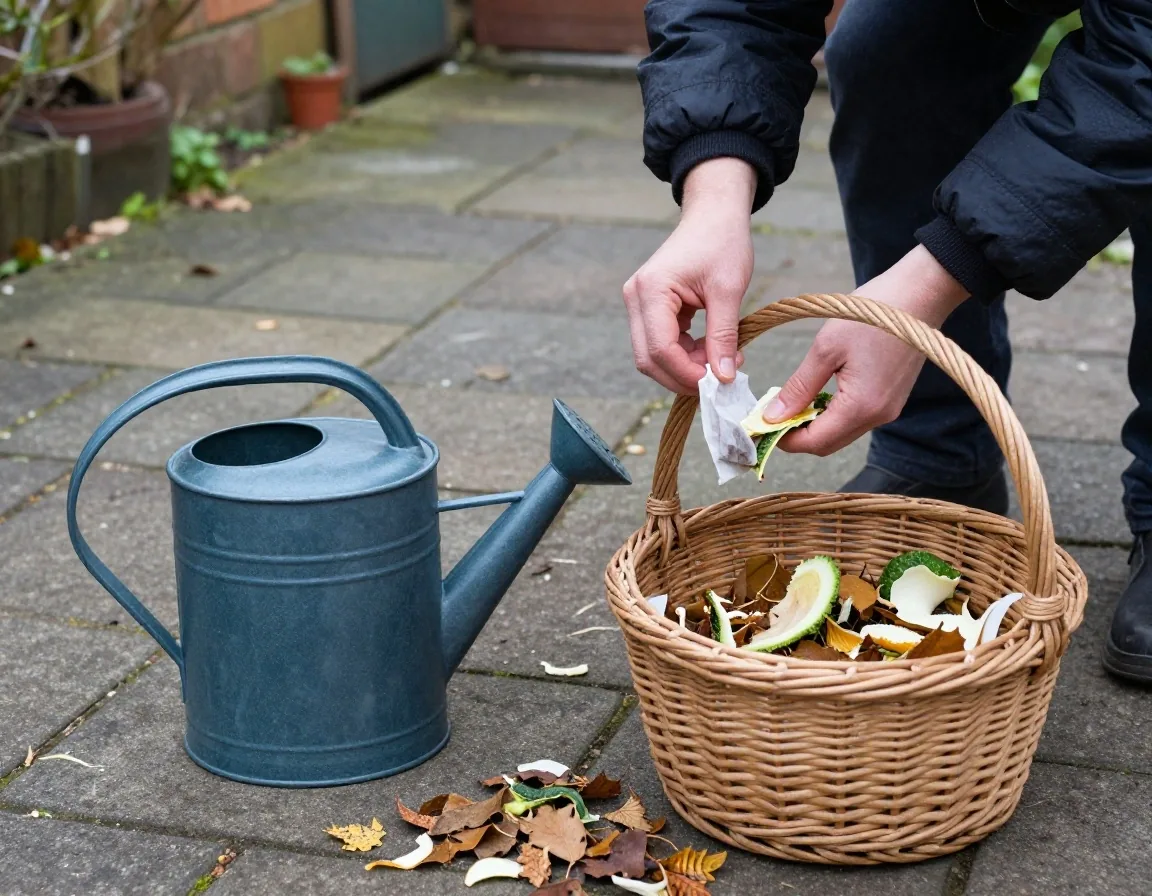
Close the loop on food scraps

By now you have a scrap container. This week, decide what happens to its contents. Home compost bin if you have a garden. Bokashi or wormery if you have a balcony or a small kitchen. Council food waste collection if your borough runs one. A community compost scheme if you are in a city that has one nearby. Even without any of these, storing food better and using leftovers deliberately cuts a lot of waste at the source. Week four is about picking one route and starting it.

What leaves the house, room by room

The cross-out on the left is the habit

Cling film over last night's pasta

Beeswax wraps for cheese, bread and cut veg; containers for everything else

Kitchen

A new roll of plastic sponges every few weeks

Washable cloths and a wooden brush that dry out between uses

Kitchen

Thin produce bags from the supermarket

Reusable produce bags kept in the bag you actually take shopping

Hallway

Takeaway containers binned after one meal

Rinsed and reused for leftovers or freezer portions

Kitchen

Bottles of spray cleaner bought monthly

Refills or a concentrate you dilute at home

Bathroom

Clothes worn once and then threaded out

Repurposing old clothes into cleaning cloths, patches and mending stock

Bedroom

The whole list is a set of sustainable lifestyle habits, not a shopping list. Buy only the swaps that replace something you were already buying, and buy them once. A cloth you wash beats a sponge you throw away; a jar you already own beats a new storage set.

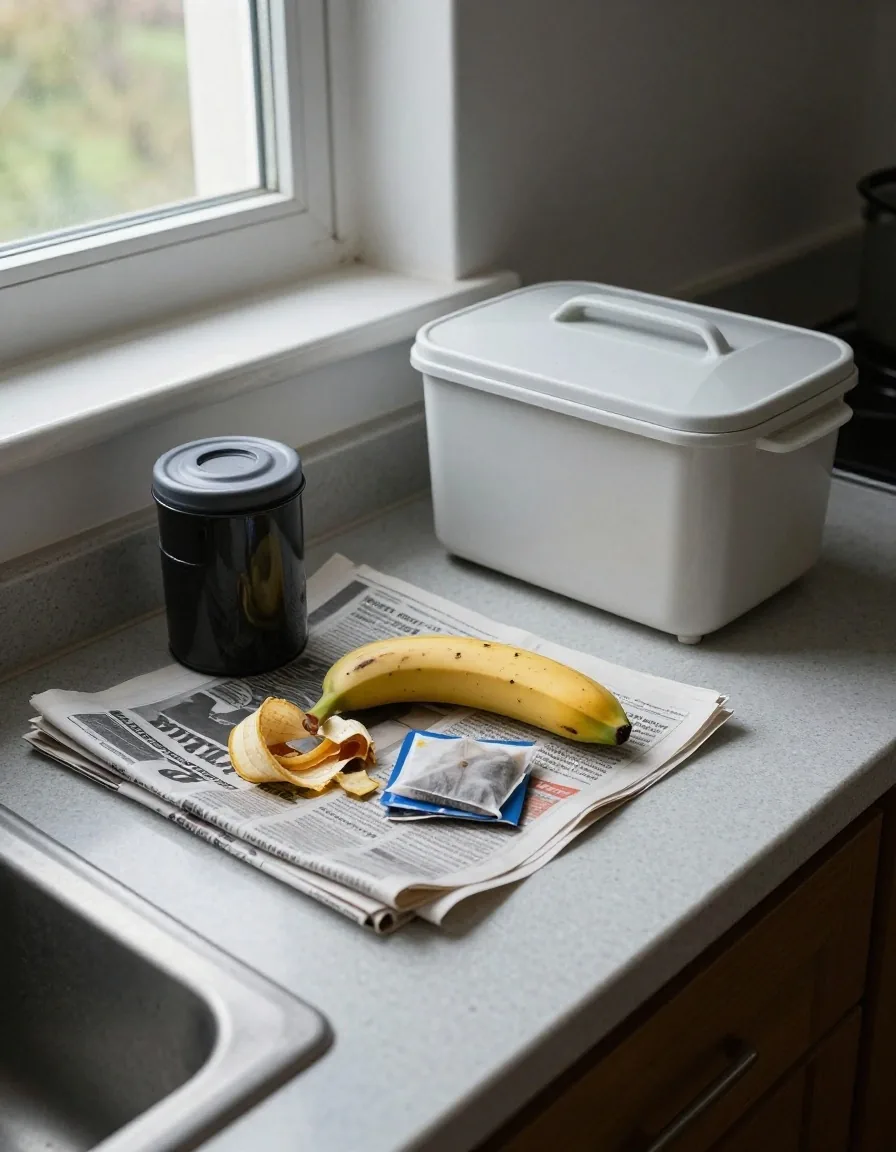
A lined kitchen caddy of food scraps beside a bokashi bin on a flat worktop

Where the scraps actually go

Composting food scraps at home looks different depending on the space you have. Pick one route in week four and stick with it for a full month before you judge it. All four options below keep food out of general waste; they differ in how much room, time and money they ask of you.

Home compost bin

Needs outdoor space. Handles fruit and vegetable scraps, tea leaves, coffee grounds and eggshells. Not cooked food or dairy.

Bokashi or wormery

Works indoors or on a balcony. Bokashi takes cooked food and small bones; a wormery suits a steady supply of raw peelings. Both need a little attention each week.

Council food waste collection

Available in some boroughs, including for flats with shared bins. Usually the least effort — check your council's rules before you buy anything.

Community compost scheme

Common in cities with allotments or community gardens. Drop off scraps weekly. Good if you live in a flat with no outdoor space at all.

If none of these fits this month, you can still cut food waste at the source: store food where you can see it, plan two leftover meals a week, and freeze portions before they turn.

The starter checklist

A tick-list, not a scoreboard

  • Noted your bin contents for seven days
  • Chose one main category to work on
  • Replaced two single-use kitchen items with reusables
  • Set up a food scraps container
  • Decided where food scraps go — compost, bokashi, council or community
  • Checked your council recycling rules for one confusing item
  • Fixed or repurposed one broken item instead of binning it

Zero waste starter kit, honestly sized

You need very little to begin

A jar or container for food scraps, and reusable produce bags if you currently use plastic ones. Everything else can be improvised from what you already own — an old towel cut into cloths, a takeaway tub used for leftovers, a glass jar for dry goods.

Buying kit before you know what you need is the most common reason the first month fails. Wait until week three, once your audit tells you which swaps you will actually use.

Sustainable shopping and buying in bulk

What to do in month two

Month two is for the second category, plus one repair. Pick the second-largest item from your audit and repeat the same process: watch it for a week, find one lever, change it. Then add one upcycling project using something already in your home.

That could be how to upcycle glass jars into dry-goods storage, repurposing old clothes into cleaning cloths and mending patches, or giving a piece of furniture a second life. The upcycling vs recycling difference matters here: recycling hands an item back to a system, upcycling keeps it in your home doing a new job.

Slow and steady beats fast and abandoned. People who change five things in a month often run out of energy by month three. People who change two things per month tend to still be doing them a year later.

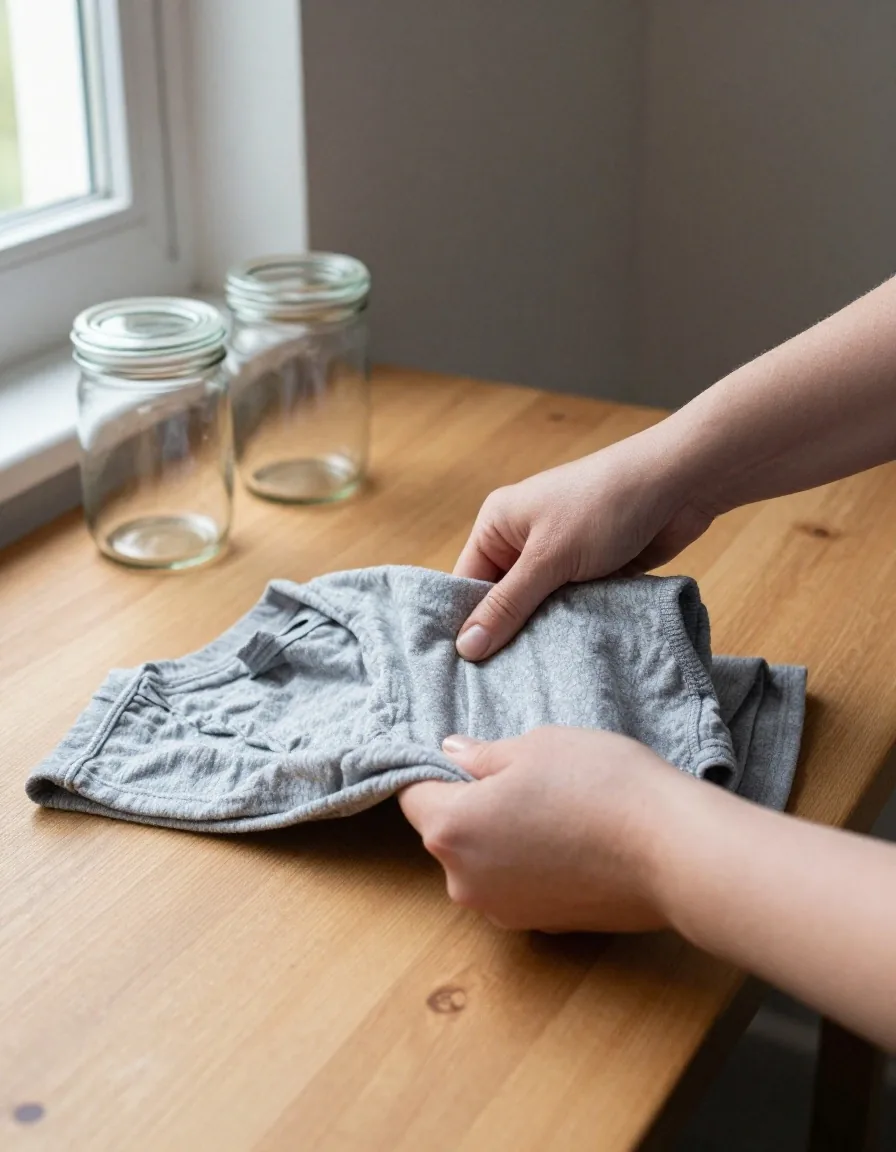
Old t-shirts being folded into cleaning cloths next to clean glass jars on a kitchen table

Most homes already hold the material for a first upcycling project — an old shirt, a jam jar, a wobbly chair.

Common reasons the first month fails

Adjust any one and the month usually works

Buying kit first

A compost bin you did not need

A compost bin when food scraps were never the biggest problem, or beeswax wraps when cling film was rarely used. The audit is what tells you which is which — do it before you spend anything.

Starting in the wrong place

The hardest category first

Working on something difficult that was not causing much waste anyway burns you out for no return. Start with the biggest category, even if it feels less impressive than the change you saw online.

Aiming for zero

Quitting at sixty percent

Perfect is not the target. Aim for one change you can repeat next week, not a perfect week. A household that keeps four habits beats one that tries seven and drops them by March.

Before you start asking

Rented flats, no garden, shared kitchens

Can I do this in a rented flat with no outdoor space?

Yes. Bokashi bins and wormeries work indoors or on a balcony, and some councils run food waste collections for flats with shared bins. Composting without a garden is covered in more detail on the composting page.

Do I need to buy anything for the starter month?

Very little. A jar or container for food scraps, and reusable produce bags if you currently use plastic ones. Everything else can be improvised from what you already own.

What if I share a kitchen with flatmates?

Start with your own habits and keep your setup small and labelled. A shared scrap container with a clear label and a rota often gets more buy-in than a polite request to change everything.

Start with the week that matches your biggest bin problem, not with the top of this page. If you get stuck on a swap that does not fit your kitchen, tell us what you cook and we will suggest something that does.

Monday to Friday, 9am – 6pm · Saturday, 10am – 2pm

Still not sure where your household should start?

Send us a sentence about your home — a flat, a shared kitchen, a house with a garden — and we will point you at the first week worth running. You can also work through the kitchen swaps or the upcycling projects at your own pace.